

Top
Authors
Published
4 Jul 2026Form Number
LP2470PDF size
9 pages, 1.1 MBSubscribed to LP2470.
Thank you for your feedback.
Abstract
The Lenovo ThinkSystem SC777 V4 represents a new generation of hybrid computing platforms designed to address the growing convergence of high-performance computing (HPC) and artificial intelligence (AI). Built on the NVIDIA GB200 NVL4 architecture, the SC777 V4 tightly integrates Grace CPUs, Blackwell GPUs, high-bandwidth memory, and advanced interconnect technologies into a balanced system optimized for both scientific simulation and AI-driven workloads. Designed for researchers, scientists, engineers, AI practitioners, and organizations deploying large-scale simulation, modeling, training, and inference applications, the platform enables a broad range of workloads—from molecular dynamics and computational chemistry to large language models and AI-assisted scientific discovery—to run on a common infrastructure.
This paper provides an early look at the platform’s architecture and capabilities, highlighting how the convergence of HPC and AI can simplify infrastructure planning while enabling the next generation of scientific, engineering, and enterprise innovation.
Introduction
From scientific simulation and engineering analysis to AI model training and inference, organizations increasingly require a common platform capable of supporting diverse workloads. The Lenovo ThinkSystem SC777 V4 brings together the technologies needed to accelerate both HPC and AI on a single system. The article will examine the platform design, discuss the types of HPC, AI, and AI-for-Science workloads it is designed to support, and present initial functional and application-level performance results.
The results presented in this paper provide an early look at performance on the SC777 V4 platform. Testing was conducted using pre-production laboratory systems and software environments available at the time of evaluation as the platform approaches general availability. As with any new platform, performance is expected to continue evolving as hardware, firmware, drivers, libraries, and applications mature. The results should therefore be viewed as directional indicators that highlight platform capabilities and workload behavior rather than final optimized performance levels.
ThinkSystem SC777 V4 overview
The Lenovo ThinkSystem SC777 V4 is designed from the ground up as a next-generation hybrid platform for both HPC and AI workloads—bringing together CPU, GPU, memory, and interconnect into a tightly integrated system.
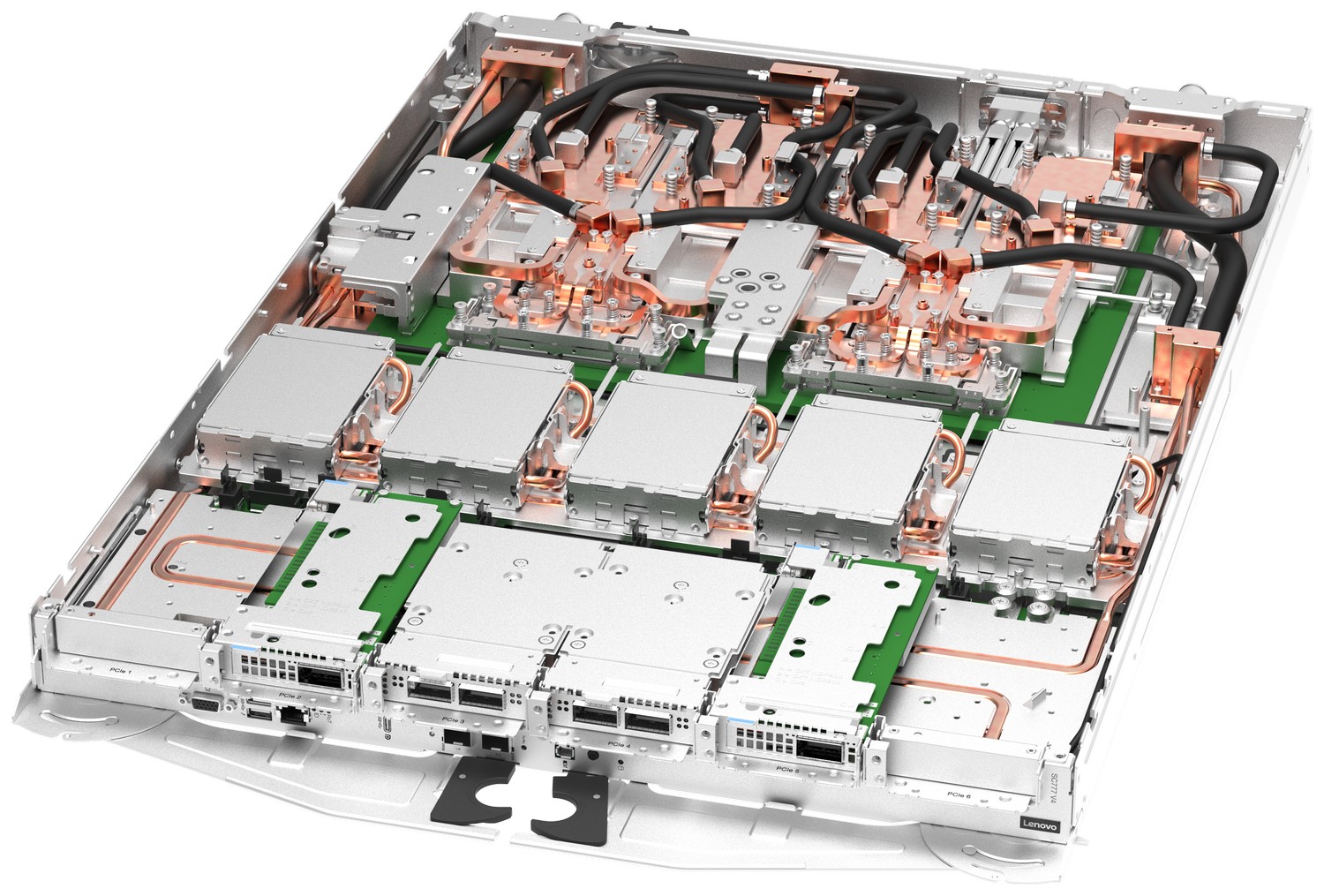
Figure 1. The Lenovo ThinkSystem SC777 V4 Neptune Server (AI Training configuration)
The SC777 V4 leverages the NVIDIA GB200 NVL4 architecture, combining Grace CPUs and Blackwell GPUs into a single, tightly integrated node design. Unlike traditional architectures that rely on discrete, loosely coupled components, SC777 V4 is engineered as a balanced, system-level platform.
The design of the SC777 V4 eliminates common bottlenecks seen in conventional systems:
- CPUs starved for memory bandwidth
- GPUs waiting on data movement
- Interconnect limiting multi-GPU scaling
As a result, the platform delivers:
- More consistent performance
- Higher system efficiency
- Better scaling across HPC and AI workloads
Each SC777 V4 server tray includes:
- Compute
- 2x NVIDIA Grace CPUs (72 Arm Neoverse V2 cores)
- 4x NVIDIA B200 GPUs (GB200-class modules)
- Memory
- 960GB of LPDDR5x ECC Memory (480GB per CPU)
- 744GB HBM3e Memory (186GB per GPU)
- High-speed Interconnect
- 300 GB/s bi-directional NVLink-C2C connectivity between CPUs
- 450 GB/s bi-directional NVLink-C2C connectivity between each CPU and its two integrated GPUs, unified coherent memory access
- 600 GB/s bi-directional NVLink connectivity between each of the four GPUs
- Storage & I/O
- Supports up to 10x E3.S SSDs (internal)
- Support for NVIDIA NDR/XDR networking via CPU PCIe slots or GPU-direct modules, up to 800 Gbps per GPU with GPUDirect
Architecture
Features of the SC777 V4 that drive performance at scale include:
- High-bandwidth memory architecture feeds both CPU and GPU workloads efficiently
- CPU-to-GPU unified, coherent memory enables:
- Faster data access
- Reduced need for explicit data movement
- Improved GPU utilization
- High-speed GPU-to-GPU interconnect:
- Enables GPUs to operate as a single large compute domain
- Critical for AI training and distributed HPC workloads
- Integrated into the ThinkSystem N1380 Neptune enclosure (13U)
- Designed for dense scaling:
- Up to 96 GPUs per standard 19” width rack
- Flexible networking:
- Supports high-speed NVIDIA NDR and XDR fabrics
The SC777 V4 compute nodes are installed vertically in the ThinkSystem N1380 enclosure, as shown in the following figure.
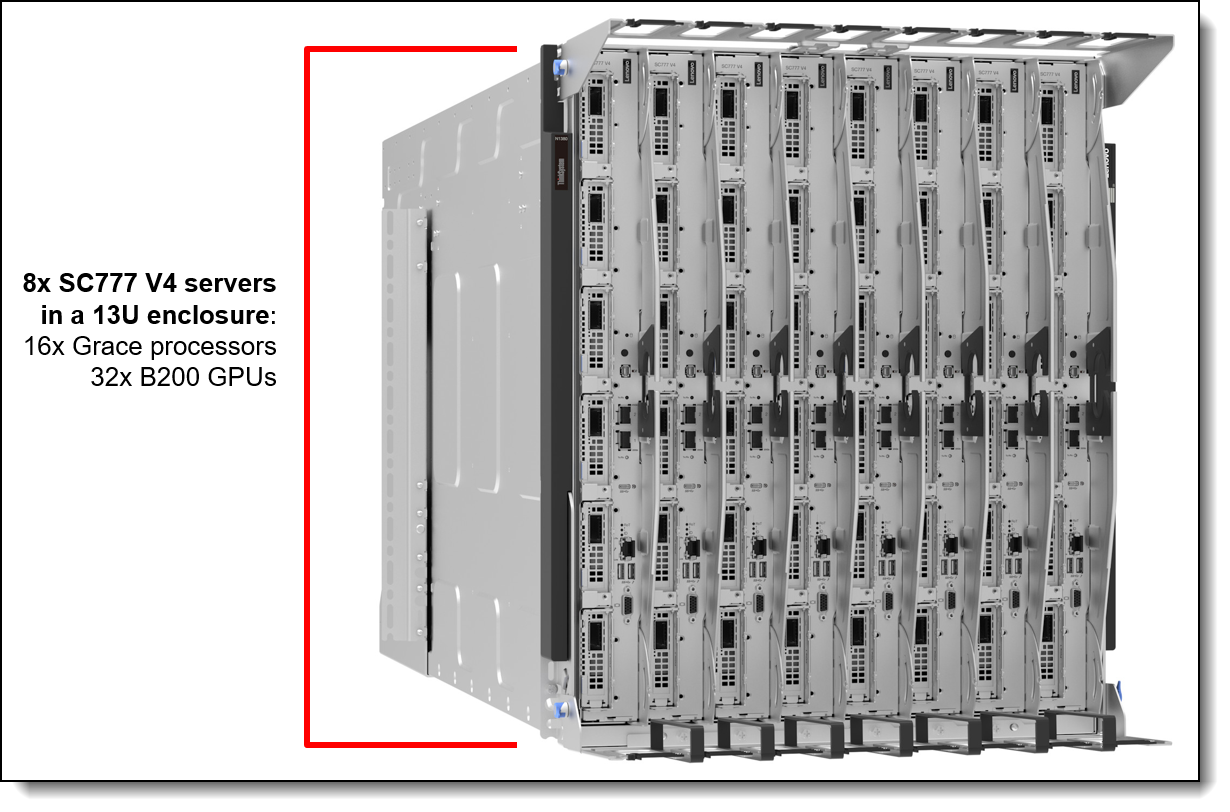
Figure 2. Front view of the N1380 enclosure with 8x SC777 V4 servers
The SC777 V4 incorporates Lenovo’s Neptune liquid cooling technology, featuring a 100% direct water-cooled design that eliminates traditional airflow constraints and supports high power-density deployments.
- Enables higher sustained system performance under load
- Improves energy efficiency in dense GPU environments
- Supports inlet water temperatures up to 45°C, allowing some data centers to operate without chilled water systems, reducing overall energy consumption
SC777 V4 is not just a GPU-accelerated system - it is a purpose-built platform designed to unify HPC simulation and AI workloads on a single architecture.
Workloads
With its tightly integrated NVIDIA Grace + Blackwell architecture, the SC777 V4 is built to support a wide spectrum of modern workloads—spanning traditional HPC, enterprise AI, and emerging AI-driven scientific workflows.
- Traditional HPC simulation and modeling
- Computational fluid dynamics (CFD)
- Molecular dynamics
- Electronic structure and quantum chemistry
- Weather and climate modeling
- Finite element analysis (FEA)
- Artificial intelligence and data-driven workloads
- Large language model (LLM) training and fine-tuning
- AI inference at scale
- Computer vision and generative AI
- Graph analytics
- AI for Science and hybrid HPC + AI workflows
- AI-assisted simulation and surrogate modeling
- Drug discovery and life sciences research
- Materials science and quantum modeling
- Climate prediction with machine learning augmentation
- Real-time simulation and AI inference pipelines
Functional Baseline Performance
Functional performance tests are among the first validation steps performed after system installation and are used to baseline compute, memory, and interconnect behavior. These tests are not intended to represent real-world workloads. Instead, they provide a controlled way to verify that each component of the system is delivering expected performance and that the platform is properly optimized. These results also help inform expected behavior for real-world workloads when combined with application profiling data.
To establish these baselines, the following set of well-known synthetic benchmarks are typically used:
- Compute Foundational:
- HPL (High Performance Linpack)
- HPL-MxP (mixed precision)
- GEMM / cuBLAS-based tests
- Memory Bandwidth Foundational:
- STREAM
- HPCG (compute + memory behavior)
- Interconnection Foundational:
- NCCL (GPU-to-GPU communication)
- NVBandwidth (CPU-to-GPU bandwidth)
The table below lists the functional performance baseline for the SC777 V4 platform.
The synthetic benchmark results are reported using three reference points:
- Results represent the measured performance achieved on the tested SC777 V4 configuration
- Peak represents the theoretical maximum performance obtainable from the underlying hardware based on architectural specifications
- Expected reflects the practical performance range anticipated for a well-configured and properly optimized system.
Comparing measured results against expected and peak values helps validate system health, identify potential performance bottlenecks, and confirm that the platform is operating as intended.
* NVIDIA’s FP64 emulation works by decomposing double‑precision values into multiple lower‑precision components, executing many high‑throughput tensor core operations on those pieces, and then recombining the partial results to reconstruct an FP64 outcome. This leverages the massive performance gap between low‑precision and native FP64 hardware, so the aggregate throughput of many fast low‑precision operations can exceed native FP64 performance while aiming to preserve equivalent numerical accuracy.
Expected values are derived from publicly available data and internal performance projections informed by prior-generation results and published technical specifications.
Overall, the results show that the system is operating at or near (within 5%) expected performance levels across all major subsystems.
Real-World Workload Performance
While synthetic benchmarks are essential for validating system readiness, the true measure of a platform is how it performs on real-world workloads.
The results listed in the table below provide an early view of application-level performance across a representative set of HPC and AI workloads. Unlike synthetic benchmarks, these workloads exercise complex compute patterns, memory access behavior, and communication requirements that more closely reflect production environments. As such, they provide valuable insight into how the SC777 V4 performs across a diverse range of scientific computing and AI applications while highlighting the benefits of the NVIDIA GB200 NVL4 architecture.
The table presents an early view of application-level performance on the SC777 V4. Uplift represents the relative performance improvement compared to the baseline system, where 1.50x indicates a 50% improvement and 2.00x indicates twice the performance of the baseline.
* Measured on 1 GPU
** Comparisons are done with respect to a server with the same number of GPUs as the presented SC777 V4 result
While the SC777 V4 delivers strong performance improvements across both HPC and AI workloads, the magnitude of uplift differs based on workload characteristics.
The table below summarizes the key differences between traditional HPC and AI workloads, helping explain why some workloads realize larger gains from newer GPU architectures than others.
Because HPC applications are often bound by memory access, data movement, communication patterns, and FP64 precision requirements, they generally realize more modest generational performance gains than AI workloads.
The SC777 V4 demonstrates strong, balanced performance across a diverse set of real-world workloads. HPC applications see steady, meaningful improvements driven by system balance and memory efficiency. AI workloads realize significantly larger gains, reflecting the rapid evolution of GPU architectures toward data-driven and mixed-precision computing.
Conclusion
The SC777 V4 delivers strong and consistent performance across both HPC and AI workloads. It provides meaningful gains for traditional HPC applications, while AI training and inference workloads benefit from significantly higher improvements. This reflects a broader industry trend, where modern GPU architectures are increasingly optimized for AI and mixed-precision compute. At the same time, the SC777 V4 maintains the performance, stability, and scalability required for demanding scientific workloads.
The SC777 V4 provides a single platform capable of supporting today’s HPC workloads and enabling the next wave of AI-driven innovation.
The benchmark results presented in the document reflect a snapshot of performance under the tested configuration. Results may vary based on system settings, including operating system, BIOS/UEFI configuration, firmware levels, software environment, and workload conditions.
Authors
Kevin Dean is the Senior Manager of the HPC/AI Solution Architect Team in the ISG Offerings Group at Lenovo. Kevin oversees the strategy and processes for HPC and AI solutions in this position, contributes his knowledge of HPC/AI application performance, and serves as the CAE/manufacturing architect. Kevin has over 20 years’ experience in HPC, AI, and computational engineering, including nine years at Lenovo focused on HPC/AI performance and solution architecture, and 12 years in aerodynamic design and CFD for the U.S. defense and automotive racing sectors. He earned his Master’s Degree in Aerospace Engineering at the University of Florida, following a Bachelor’s in the same field from Virginia Polytechnic Institute and State University.
Conor Elrick is an HPC/AI Performance Engineer in the ISG Offerings Group at Lenovo working as part of the HPC/AI Solutions Architect Team. Conor does setup and performance benchmarking on compute servers, networking infrastructure and storage solutions to push hardware to its limits and get the best results for real world scientific workloads. He has been at Lenovo for over 2 years. Conor earned his PhD in Theoretical Particle Physics from the University of Edinburgh in 2024 and a Master’s Degree and Bachelor’s Degree in the same field before that, with a focus on physics simulations on compute systems.
Trademarks
Lenovo and the Lenovo logo are trademarks or registered trademarks of Lenovo in the United States, other countries, or both. A current list of Lenovo trademarks is available on the Web at https://www.lenovo.com/us/en/legal/copytrade/.
The following terms are trademarks of Lenovo in the United States, other countries, or both:
Lenovo®
Neptune®
ThinkSystem®
The following terms are trademarks of other companies:
NVIDIA®, cuBLAS, NVIDIA Grace, and NVLink® are trademarks of NVIDIA Corporation.
Other company, product, or service names may be trademarks or service marks of others.
Configure and Buy
Please select a locale
Full Change History
Course Detail
Employees Only Content
The content in this document with a is only visible to employees who are logged in. Logon using your Lenovo ITcode and password via Lenovo single-signon (SSO).
The author of the document has determined that this content is classified as Lenovo Internal and should not be normally be made available to people who are not employees or contractors. This includes partners, customers, and competitors. The reasons may vary and you should reach out to the authors of the document for clarification, if needed. Be cautious about sharing this content with others as it may contain sensitive information.
Any visitor to the Lenovo Press web site who is not logged on will not be able to see this employee-only content. This content is excluded from search engine indexes and will not appear in any search results.
For all users, including logged-in employees, this employee-only content does not appear in the PDF version of this document.
This functionality is cookie based. The web site will normally remember your login state between browser sessions, however, if you clear cookies at the end of a session or work in an Incognito/Private browser window, then you will need to log in each time.
If you have any questions about this feature of the Lenovo Press web, please email David Watts at dwatts@lenovo.com.


